Ryuichi Sakamoto Photography by Akihiro Takayama 1982
Ryuichi Sakamoto won a number of awards for his work as a film composer,
beginning with the BAFTA Award for Best Film Music for his score for Merry
Christmas, Mr. Lawrence, in 1984. His greatest award success was for scoring
The Last Emperor (1987), which won him the Academy Award for Best Original
Score, Golden Globe Award for Best Original Score, and Grammy Award for
Best Score Soundtrack Album for a Motion Picture, Television or Other Visual
Media,as well as a BAFTA nomination in 1989.
His score for The Sheltering Sky (1990) won him his second Golden Globe
Award, and his score for Little Buddha (1993) received another Grammy Award
nomination. In 1997, his collaboration with Toshio Iwai, Music Plays Images
X Images Play Music, was awarded the Golden Nica, the grand prize of the
Prix Ars Electronica competition. He also contributed to the Academy Award
winning soundtrack for Babel (2006) with several pieces of music, including
the closing theme "Bibo no Aozora". In 2009, he was awarded the
Ordre des Arts et des Lettres from France's Ministry of Culture for his
musical contributions. His score for The Revenant (2015) was nominated
for the Golden Globe and BAFTA, and won Best Musical Score from the Dallas?Fort
Worth Film Critics Association.
Sakamoto won the Golden Pine Award (Lifetime Achievement) at the 2013 International
Samobor Film Music Festival, along with Clint Eastwood and Gerald Fried.
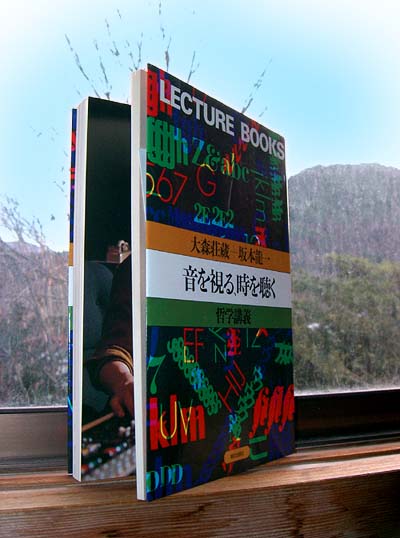
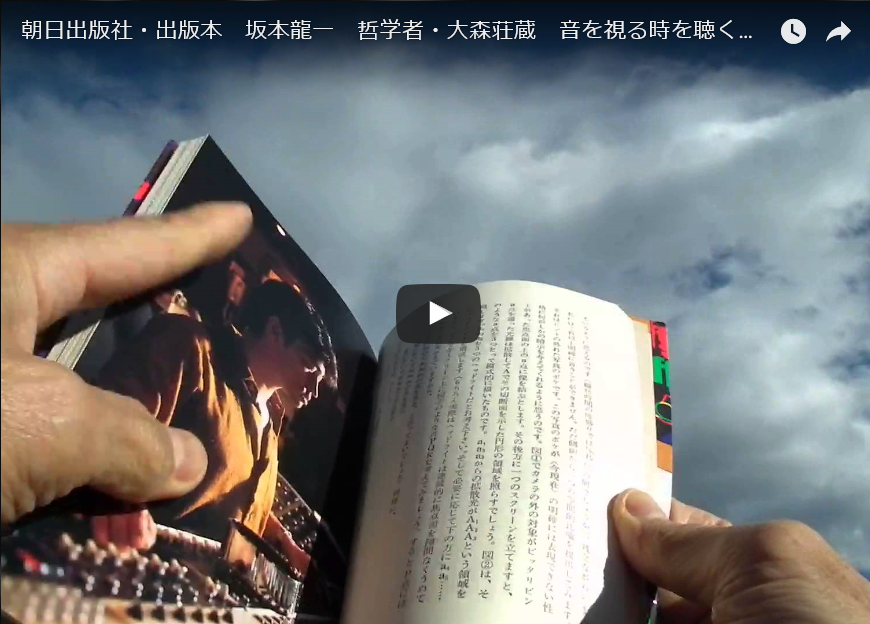
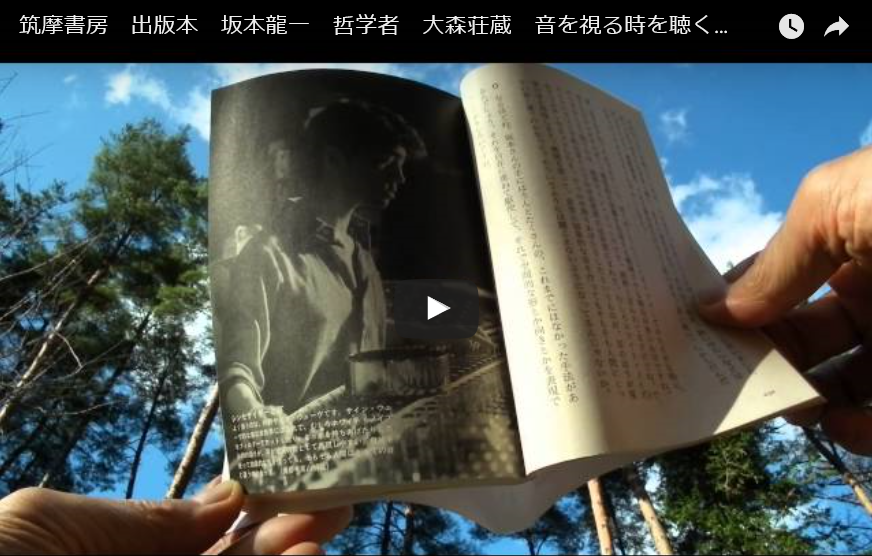
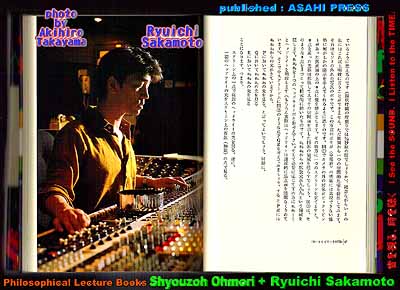
Ryuichi Sakamoto Published BOOK
" TIME to LISTEN and SOUND to SEE "
RYUICHI SAKAMOTO (c) Akihiro Takayama Original Photography
*The Book of 1982 year version *
.The photograph in this time that AkihiroTakayama shot Sakamoto Ryuichi
in the Recoding studio in TOKYO on 1982. comes out the Sakamoto Ryuichi
virgin Published and BOOK
" TIME to LISTEN and SOUND to SEE " dialogue philosophical real
intention with printed book philosopher OMORI SHYOZO he with it was disclosed
as the underwear "target photograph".
however 2004 now' this book is not a stock in distribution and hope see
the photograph and the relation thought periphery print along the love
of a little knowledge. . news add infomation Re-New Book Released on 2007 Chikuma-Syobo Published
more
*** SONY MUSIC から発売中
Akihiro Takayama が撮影したY M O 写真6作品がCollector's Vinyl Edition
3BOX内に有ります。
内容は超レアーで豪華な造り音質も現在最高峰を誇り、必然的に音楽投資にもなります。
Y M O テクノデリックCollector's Vinyl Edition BOX 2019年版完全生産限定盤 定価9000円
Y M O サービス Collector's Vinyl Edition BOX 2019年版 完全生産限定盤 定価9000円
Y M O 浮気なぼくら Collector's Vinyl Edition BOX 20019年版 完全生産限定盤 定価9000円
* 1980 ryuichi sakamoto portraits photo by akihiro takayama 1980 at toei
studio tokyo. to pool heibon punch magazine
* 1980 ryuichi sakamoto ymo nagoya live photo by akihiro takayama 1980
published to usa magazine hit parader (selling a half-million 500,000 copies
monthly).
* 1980 ryuichi sakamoto ymo live photo by akihiro takayama 1980 published
to japan magazine heibon punch (selling 1-million 1000,000 copies weekly).
* at FCCJ tokyo 1980 ryuichi sakamoto ymo photo by akihiro takayama to
magazine heibon published
* ryuichi sakamoto ymo photo by akihiro takayama for original photo exhibition
to heibon punch magazine at budokan 1980.
発行部数100万冊の平凡パンチ誌にイエローマジックオーケストラ ライブ3写真作品
著作AKIHIRO TAKAYAMAを掲載
* ryuichi sakamoto ymo photo by akihiro takayama for original photo exhibition
to heibon punch magazine tokyo 1981
* ryuichi sakamoto ymo photo by akihiro takayama koma live to key board
magazine published 1981
* 1981年コマライブで撮影した写真作品著作・Akihiro Takayamaをアメリカのキーボードマガジン誌と提携している日本のキーボードマガジン誌にカラーグラビアで大掲載1982年3月号
。
UK イギリスで発行 SOUNDS 誌 1982年1月30日号に YMO 坂本龍一 メタ政治演説シーン掲載
コマライブ1981 写真著作・Akihiro Takayama 。
* ryuichi sakamoto ymo photo by akihiro takayama to pool heibon punch magazine
1982 aoyama studio tokyo
* ryuichi sakamoto photo by akihiro takayama at nhk studio published keyboard
magazine
* ryuichi sakamoto ymo photo by akihiro takayama for original photo exhibition
to heibon punch magazine at recording studio 1982
* ryuichi sakamoto ymo live photo by akihiro takayama to magazine published
of over seas magazine on special pop japan 1980.
* breath keyboard ryuichi sakamoto photo by akihiro takayama to key board
magazine on front cover published 1982.
* 旺文社発行 中三時代15誌 1983年5月号に坂本龍一とトップアイドル松本伊代のフランス料理で文化交流
坂本龍一ベニス旅行で飛翔した思い出を語る 写真著作・高山明弘 で特集掲載
中三時代は15歳180万人が必読していた月刊誌。 about sakamoto ryuichi's trip
in Venice / japan top J-Pop Girl dining together RYUICHI SAKAMOTO photo
by AKIHIRO TAKAYAMA . at restlan room booth of tetsuko-noheya studio in
harajuku tokyo. 1983 magazine published from OBUNSYA PUBLISH CO.
* 1983 works heibon punch magazine published in cluding ryuichi sakamoto
with ymo winter fashion photo by akihiro takayama 1983
* *
go to free link
ジュビリー2000 /musicians 「ほっとけない世界のまずしさ」 LIVE
EARTH MORE TREE
*この時代のエピソード*
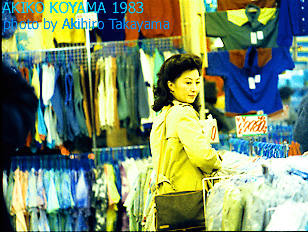
坂本龍一が、大島渚監督の 映画-戦場のメリークリスマス- (デビッドボーイ ビートたけし氏などとも共演)で忙しくなっていた1983年春,
アキヒロは監督大島渚氏の妻でもある小山明子女優を渋谷タワーレコードの1階のジーンズショップで遭遇し目が遭ったので目礼をしながら撮影をした
mr. Nagisa Oshima 's Wife and Actress ms. Akiko Koyama photo by Akihiro
Takayama .
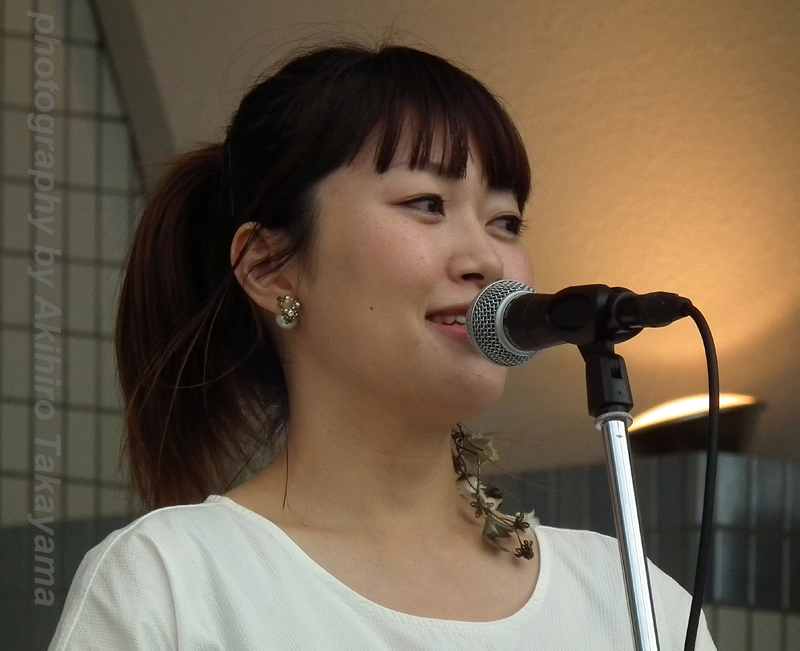
坂本龍一 教授の娘さんです 坂本美雨 2016年
DNA of RYUICHI SAKAMOTO "MIU SAKAMOTO photo by AKIHIRO TAKAYAMA 2016
tokyo.
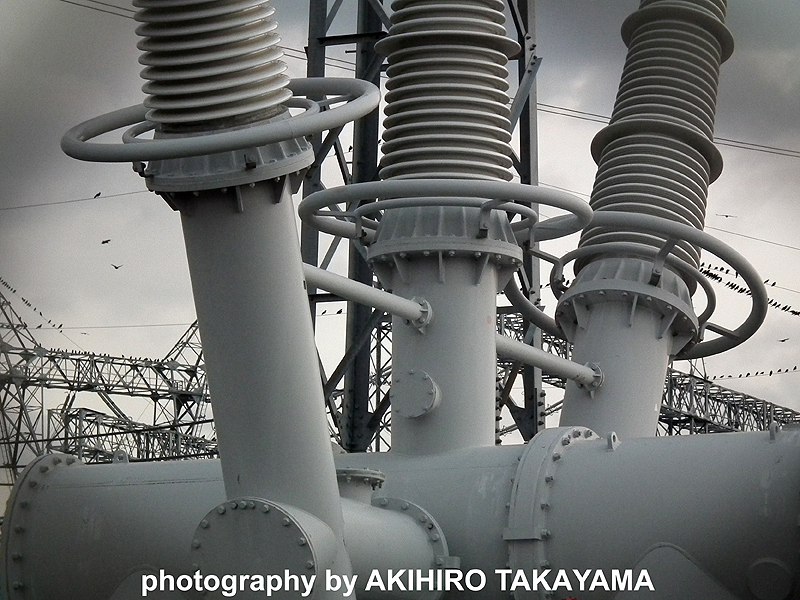
Parts of ultra-high voltage frequency conversion substation
Photography by AKIHIRO TAKAYAMA 2012
このパーツは時間を飛行する潜水艦ではなくて現実に存在し機能している。
( 超高電圧周波数変換変電所のパーツ 2012年 撮影 AKIHIRO TAKAYAMA
日本の東50Hz・西60Hzを変換して共有するためのパーツで3・11以後のエネルギー分配になくてはならない重要パーツである。 将来 脱原発、融合炉、スマートシティー構想もふまえ商用電源周波数は統一するだろう。)
Art.Visual.Photo. copyrights AKIHIRO TAKAYAMA all rights reserved. akihirotakayama@hotmail.com
-------------------------------------------------------------------
"Oomori Philosophy," advanced by Shozo Oomori (1921 -1997), one
of postwar Japan’s most prominent philosophers, is a "monism of manifestation"
(or tachimachi monism). It thoroughly dismantles the mind matter (subject-object)
dualism that has underpinned modern philosophy since Descartes, asserting
instead that our everyday perceptual experience constitutes the entirety
of reality. The core of his thought can be synthesized into three pivotal
concepts:1. The Monism of ManifestationConventional scientific wisdom assumes
that objective "objects" exist independently in the world, and
that our brains or "minds" merely perceive them like images on
a screen. Oomori dismissed this view as an illusion. He argued that the
immediate, vivid "manifestation" of the world at the very moment
of perception such as seeing or touching is the sole reality. Beneath or
behind this presence, there is neither a hidden "thing-in-itself"
nor an internal "mind" reflecting it.2. Over-depiction (Kasanegaki)This
raises a question: which is true the rich everyday life we actually experience
(the perceived world) or the scientific world described in terms of atoms
and molecules (the physical world) Oomori rejected the subject-object dualism
of modern scientism, which posits that scientific descriptions are the
ultimate truth while everyday perception is merely an illusion generated
by the brain. Instead, he maintained that everyday language and scientific
language are simply "over-depicted" (or superimposed) independently
onto a single canvas: our everyday perception. Neither description takes
precedence over the other; both are equally valid.3. The Philosophy of
Time and Memory: "Time Does Not Flow" and "Memories are
Perceptions"In his later years, Oomori arrived at radical propositions
that challenged our fundamental assumptions about time and memory Time
Does Not Flow: Time is not a river running from the past to the future
we exist entirely and exclusively within the immediacy of the "here
and now."Memories are Perceptions (The Construction of the Past) He
contended that memory is not the retrieval or reproduction of objective
past facts. Rather, it is the creative construction of the past in the
present moment, generated purely through the perceptual manifestation of
the act of recollecting here and now.
japanese font
日本を代表する哲学者・大森荘蔵(1921-1997)が唱えた「大森哲学」とは、デカルト以来の近代哲学が前提としてきた「心(主観)と物(客観)」の二元論を徹底的に解体し、私たちの日常的な知覚経験こそが世界のすべてであるとする「立ち現われ一元論」の哲学です。その思想の核心は、大きく以下の3つの概念に要約されます。1.
立ち現われ一元論近代の科学的常識では「世界にまず客観的な『物』があり、それを脳や『心』というスクリーンが知覚している」と考えます。しかし大森はこれを錯覚であると退けました。「見る」「触れる」といった知覚の現場において、世界が生き生きと「立ち現われている」その事態こそが唯一の実在であり、その手前に隠れた「物自体」も、それを映す内面としての「心」も存在しないと主張しました。2.
重ね描き(かさねがき)では、私たちが実感する豊かな日常(知覚世界)と、分子や原子で記述される科学の世界(物理世界)はどちらが正しいのでしょうか。大森は「科学が真実で、日常の知覚は脳の錯覚」という近代科学主義の主客二元論を認めません。日常の知覚という一つのキャンバスの上に、日常の言葉による描写と科学の言葉による描写が独立して「重ねて描かれている」だけであり、両者はどちらかが優位に立つものではなく、等しく正しいとしました。3.
時間論と記憶論(「時は流れず」「思い出は知覚である」)晩年の大森は時間と記憶の常識を覆す大胆な命題に到達しました。時は流れず:
時間は過去から未来へ流れる川のようなものではなく、私たちは常に「いま・ここ」の最中だけを完全に生きています。思い出は知覚である(過去の制作)
記憶とは「過去にあった事実の再生や参照」ではなく、「いま、想起しているという知覚的な立ち現われ」を通じて、現在において過去を創造的に制作している行為にほかならないと論じた。
+++++++++++++++++++++++++++
Ryuichi Sakamoto (1952 - 2023), celebrated as a cosmopolitan maestro, transcended
the conventional archetype of the composer, integrating his creative output
with environmental activism, socio-political critique, and a singular vitalist
philosophy. His intellectual trajectory, philosophical outlook, and musical
ontology can be synthesized as follows:1. Musical Ontology: The Emancipation
of Sound and the Synthesis of NoiseSakamoto's musical praxis was grounded
in the radical destabilization of the boundary between music and noise.The
Turn toward the Non-Musical: In his later oeuvre, Sakamoto shifted away
from pristine instrumental orthodoxy, actively sampling and integrating
ambient noises such as rain, wind, urban clamor, and the sonics of melting
Arctic ice into his sonic landscapes.Aesthetics of Asymmetry and Imperfection:
Countering the symmetrical, highly structured paradigms of Western art
music, his late works pursued an asymmetric, uncontrolled resonance that
mirrored the contingency of the natural world.The Dialectic of the Piano:
Despite his affinity for the instrument, Sakamoto problematized the piano
as an industrialized apparatus violently constrained by the civilized system
of equal temperament. He famously repurposed the "tsunami-drowned
piano" from the 2011 Tohoku disaster, interpreting its deregulated
pitches not as out-of-tune, but as nature reverting to its primal state
a phenomenon he termed the "tuning of the Earth."2. Philosophy:
Temporality, Mortality, and Cosmic ContinuityHis philosophical discourse
was characterized by a departure from anthropocentrism and a yearning for
the eternal within the horizon of human finitude.Impermanence and the Cosmic
Cycle: His prolonged battle with cancer catalyzed a profound ontological
shift regarding mortality. Evoking the poignant inquiry from The Sheltering
Sky "How many more times will you watch the full moon rise" he
confronted human transience while simultaneously maintaining an Eastern
worldview of impermanence, conceptualizing life as an open-ended iteration
within a broader cosmic cyclicality.The Pursuit of Untimeliness: While
music is conventionally bound to temporal transience, Sakamoto’s late
masterworks, such as async, sought to evoke a state of suspended temporality
and infinite sustain, probing the limits of non-linear time.3. Socio-Ecological
Thought: Altruism and the Planetary GazeSakamoto functioned as a committed
activist, consistently mobilizing his cultural capital to effect socio-political
change.Ecological Stewardship and more trees: Confronting the crises of
anthropogenic climate change and deforestation, he established the conservation
initiative more trees, instantiating the ecological philosophy that humanity
remains immanent to nature.Pacifism and Anti-Nuclear Critique: Having witnessed
the 9/11 attacks in New York, Sakamoto became an enduring voice for non-violence.
In the wake of the 3/11 triple disaster, he emerged as a prominent figure
in the anti-nuclear movement, driven by an altruistic imperative to alleviate
the existential liabilities imposed on future generations.ConclusionUltimately,
Sakamoto’s musical creation, philosophical inquiry, and socio-political
engagement constituted a seamless continuum. By diagnosing the epistemological
limits of modern Western rationality which seeks the mastery of nature
by man Sakamoto established himself as a rare contemporary thinker who
deployed music to manifest a symbiotic reconciliation between humanity
and the environment, rendering audible the voice of the planet itself.
japanese font
坂本龍一(1952 - 2023)は、「世界のサカモト」として知られる音楽家であり、その活動は単なる作曲家の枠を超え、環境運動、社会批評、そして独自の生命哲学へと深く結びついていました。彼の思想、哲学、音楽観は以下のように要約できます。1.
音楽観:すべての音の解放と「ノイズ」の受容坂本龍一の音楽観の根底には、「音楽とノイズ(雑音)の境界線を取り払う」という姿勢がありました。非音楽的な音への傾倒:
キャリアの後半、彼は楽器が奏でる洗練された音だけでなく、雨の音、風の音、街の雑踏、北極の氷が溶ける音など、環境音(環境ノイズ)をサンプリングして音楽に融合させました。非対称性と不完全性の美:
西洋音楽の均整のとれた構造(対称性)に対して、晩年はより自然に近い「非対称」で「コントロールしきれない」音の響きを追求しました。ピアノという楽器への葛藤:
坂本はピアノを愛しながらも、「文明によって無理やりチューニング(平均律)された工業製品」として捉えていました。東日本大震災の津波で被災し、調律が狂った「津波ピアノ」の音を「自然が本来の姿に戻ろうとしている音(地球の調律)」と表現し、自身の音楽に深く取り入れました。2.
哲学:時間、死、そして生命の連続性彼の哲学は、「人間中心主義からの脱却」と「有限な時間の中での永遠の追求」にあります。永劫回帰と死生観:
癌との闘病を経て、彼の死生観はさらに深まりました。映画『シェルタリング・スカイ』のフレーズ「あと何回、満月を見るだろう」を好んで引用し、人生の有限さを強く意識しながらも、生命自体は地球や宇宙の大きなサイクル(循環)の一部であるという東洋的な無常観を持っていました。「非・時間」の追求:
音楽は通常、時間とともに流れて消えるものですが、晩年のアルバム『async』などに代表されるように、彼は「時間が止まったかのような感覚」や「永遠に響き続ける音」を模索しました。3.
社会・環境思想:利他主義と地球へのまなざし坂本は、音楽家としての影響力を社会変革のために惜しみなく使ったアクティビスト(活動家)でもありました。環境保護と「モア・トゥリーズ」:
地球温暖化や森林破壊に対して強い危機感を持ち、森林保全団体「more trees」を設立。「人間は自然の一部である」というエコロジー思想を体現しました。反戦・反核(脱原発):
9.11テロをニューヨークで目撃したことをきっかけに、非戦のメッセージを発信し続けました。また、東日本大震災以降は「脱原発」の運動に深く関わり、未来の世代に負の遺産を残さないための利他精神を貫きました。まとめ坂本龍一にとって、音楽、哲学、社会活動はすべて一本の線でつながっていました。彼は、人間が自然をコントロールするという思想の限界を見抜き、音楽を通じて「人間と自然の調和」や「地球そのものの声」を表現しようとした、現代の稀有な思想家でもある
 Books Page/ 46 / 48
  / 49 / 50 / 188 / Publish /